
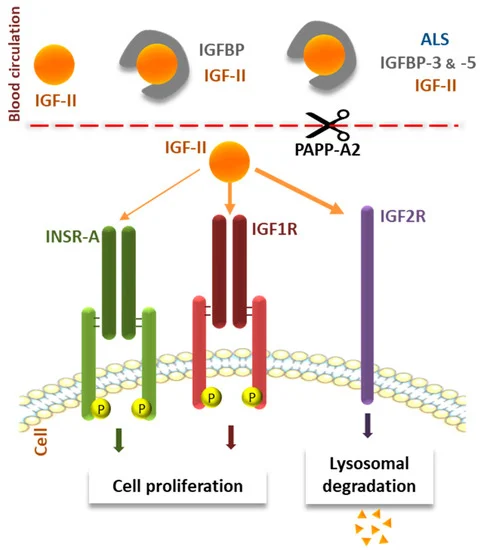
Description
IGF-II stands for Insulin-like Growth Factor II. It’s a protein encoded by the IGF2 gene in humans. Here’s some key information about IGF-II:
- Function: IGF-II is a member of the insulin-like growth factor family, which plays a crucial role in growth and development. It is involved in regulating cell proliferation, differentiation, and apoptosis (programmed cell death). Like insulin and IGF-I, IGF-II binds to specific receptors and triggers signaling pathways that promote cell growth and survival.
- Developmental Role: During fetal development, IGF-II is particularly important for regulating the growth of various tissues and organs. It is one of the major growth factors involved in prenatal growth.
- Imprinted Gene: The expression of IGF2 is subject to genomic imprinting, which means that only one of the two parental alleles is expressed while the other is silenced. This imprinted expression pattern is important for normal development and growth regulation.
- Association with Cancer: Dysregulation of IGF-II expression or signaling has been implicated in various cancers. Increased levels of IGF-II or abnormalities in its signaling pathways can contribute to uncontrolled cell growth and tumor progression.
- Diagnostic and Therapeutic Potential: Due to its involvement in growth regulation and its association with certain diseases, IGF-II and its signaling pathways are being studied as potential targets for diagnostic and therapeutic interventions, particularly in cancer treatment.
Understanding the role of IGF-II in growth and development is crucial for deciphering its implications in health and disease, as well as for exploring its therapeutic potential in various medical conditions.

Reviews
There are no reviews yet.